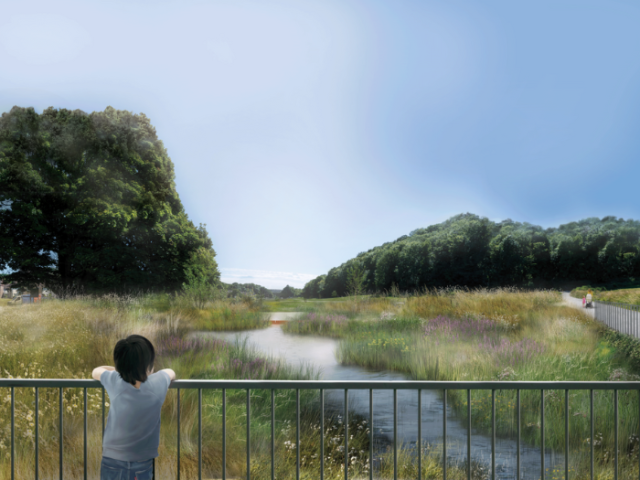
A major infrastructure scheme using natural processes to protect the city’s drinking water, help reduce flooding and create a new community space is taking shape in Brighton’s Wild Park.
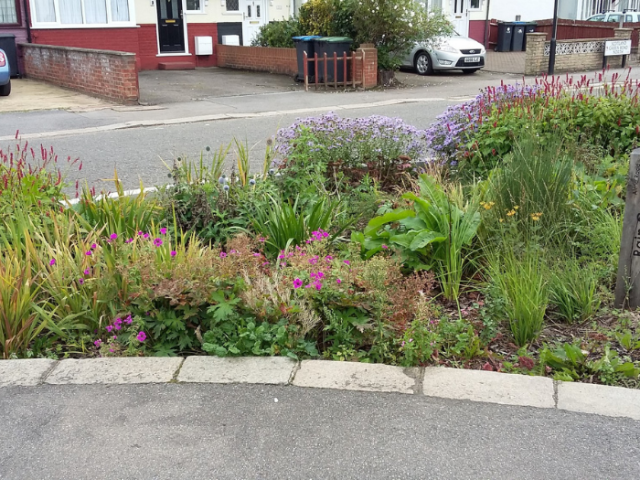
Known as a rainscape for its ability to collect rainwater, filter out pollutants and allow it to soak safely into the ground, it is the biggest to be undertaken so far in the city.
The project is planting 800 square metres of new reed beds and wetland plants, and around 45 trees, including an orchard, as well as sowing 15,000 square metres of wildflower meadow.
When it’s complete in the autumn, the rainscape will reduce pollution in the water running off the A27 by capturing the run-off in shallow basins.
Local residents are also helping to shape the project. The next community meeting is being held on 16 June, at St George’s Hall on Newick Road, from 5pm to 6.30pm. Come along to find out more about the project – and you can also volunteer for the Friends of Wild Park.
Supporting the city to be climate resilient
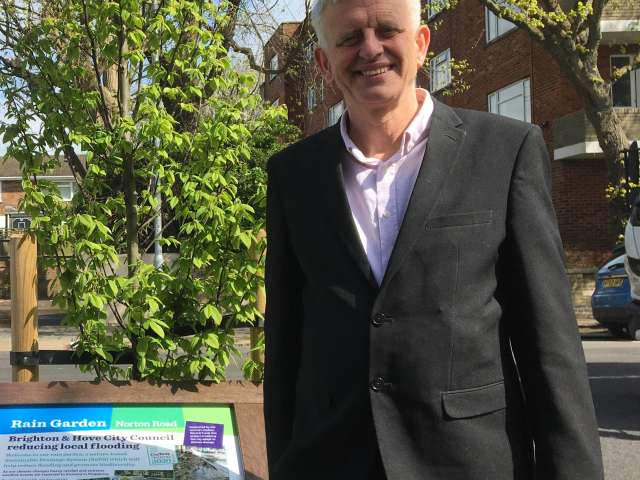
Councillor Trevor Muten, Cabinet member for Transport and the Public Realm, said: “When it rains, water is stored in a natural chalk aquifer, which lies underneath our feet in Brighton & Hove and provides drinking water for around 365,000 residents and 11 million visitors. Over the years pollution has caused increasing pressure on the aquifer, putting water quality at risk.
“The rainscape will support the city to be climate-resilient, reduce flooding and protect our groundwater using a natural process of filtration.
“Not only that, it will also provide a new community space in the park for all to enjoy.”
During spells of heavy rain and severe storms, the rainscape will channel water away from the road into a series of planted ponds and basins, which collectively can hold nearly 2 million litres of water. The plants help filter out pollutants naturally before the water soaks safely into the ground and back down into the aquifer.
Working in partnership
The Wild Park rainscape was initiated by The Aquifer Project, or TAP, a collaborative group of local water experts from Brighton & Hove City Council’s flood risk team, the Environment Agency, Southern Water, the South Downs National Park Authority and the University of Brighton, coordinated by The Living Coast UNESCO Biosphere.
Together they focus on protecting our groundwater. The group secured £2.4m funding from the National Highways Environment and Wellbeing Fund for the rainscape.
The project was brought to life after overcoming many challenges due to the scale and pioneering nature of the work.
Sean Ashworth, vice-chair of The Living Coast UNESCO Biosphere and longstanding member of the TAP Group, said: “We couldn’t have done this without the fantastic combination of partners who have come together to deliver this major project.
"It’s an amazing feat of engineering, nature-based solutions and collective knowledge, which is harnessing the power of wetlands to protect the environment and drinking-water quality, help us adapt to more frequent storms and restore biodiversity.”
Brighton & Hove City Council manages the construction of the Wild Park rainscape and the contractor is Mackley, a local civil engineering company.
The project is about halfway through, and on track for completion this autumn.
More information
Reducing climate risk by adapting to climate change and working to restore biodiversity and tackle water pollution are priorities in Brighton & Hove City Council’s Plan to provide an accessible, clean and sustainable city.