World Immunisation Week (24–30 April) is a global campaign led by the World Health Organization (WHO) to raise awareness about the life-saving power of vaccines.
Vaccines are one of the most effective public health tools we have. They help protect us from serious diseases and reduce the spread of infections in our communities. However, misinformation and myths around vaccination can stop people from getting the protection they need.
Making health decisions based on inaccurate or misleading information can put you and your family at risk. Always check facts with reputable sources like the NHS, your GP, or local health services before making decisions about vaccinations or medical care.
To mark World Immunisation Week, we’ve outlined some common myths about vaccinations and highlighted three vaccines that are particularly important to our local community: RSV, HPV and whooping cough.
Myth: “Vaccines contain harmful chemicals.”
Fact: The ingredients in vaccines are present in tiny, safe amounts and are thoroughly tested. They’re used to stabilise the vaccine or help trigger a stronger immune response. Learn more about what’s in a vaccine.
Myth: “Natural immunity is better than vaccine-induced immunity.”
Fact: While natural infection can give immunity, it comes with serious risks, such as increased illness and hospitalisation, and long-term complications. Vaccines offer safe, controlled protection without the dangers of severe illness or complications. Learn more about how vaccines work.
Myth: “I don’t need vaccines because I’m healthy.”
Fact: Even if you’re healthy, you can still catch and spread diseases. Vaccination protects you and helps stop outbreaks in the community. Learn more about why vaccination is important.
Myth: “Vaccines can overload the immune system.”
Fact: The immune system can handle many vaccines at once. Children encounter far more germs every day than they do from vaccines. Learn more about childhood vaccinations.
Myth: “RSV is just a bad cold – babies will get over it.”
Fact: RSV (Respiratory Syncytial Virus) is a common respiratory virus that can be very serious for babies, older adults, and people with certain health conditions.
While RSV often causes mild symptoms, it can lead to serious illness like bronchiolitis and pneumonia in young children and vulnerable adults. Find out more about the RSV vaccination.
Myth: “Giving my child the HPV vaccine will encourage them to become sexually active earlier.”
Fact: HPV (Human Papillomavirus) is a common virus that can lead to certain types of cancer, including cervical cancer.
There is no evidence that the HPV vaccine affects a young person’s sexual behaviour. The vaccine is about cancer prevention, not sexual activity. It’s most effective when given before exposure to the virus, which is why it's offered in school year 8, regardless of whether a young person is sexually active. Find out more about the HPV vaccine.
Myth: “I had whooping cough as a child, so I don’t need to worry now.”
Fact: Whooping Cough (Pertussis) is a highly contagious bacterial infection that can be dangerous for babies.
Immunity from previous infection or childhood vaccines fades over time. Pregnant women are offered a whooping cough vaccine between 16–32 weeks. Find out more about the whooping cough vaccination in pregnancy.
Protecting each other
Vaccines not only protect individuals but also help stop the spread of illness in our community – especially to those who can’t be vaccinated for medical reasons. By staying informed and choosing to vaccinate, we help create a safer, healthier Brighton & Hove for everyone.
Councillor Jacob Allen, Cabinet Member for Adult Social Care, Public Health and Service Transformation, said: “Vaccinations are a vital part of how we keep our city healthy - especially for the most vulnerable in society. By tackling misinformation and encouraging uptake of vaccines, we reduce the spread of serious illnesses and help protect future generations.
“As a society, we have waved goodbye to diseases once rife, like polio and smallpox, thanks to dedicated vaccination programmes.
“It is important to check your vaccination records, speak to your GP if you have any questions, and make use of trusted sources like the NHS for accurate information.”
Find out more
If you have any questions about vaccinations or need help booking an appointment, speak to your GP, pharmacist or local health visitor. You can also visit the NHS website for up-to-date guidance and eligibility criteria.
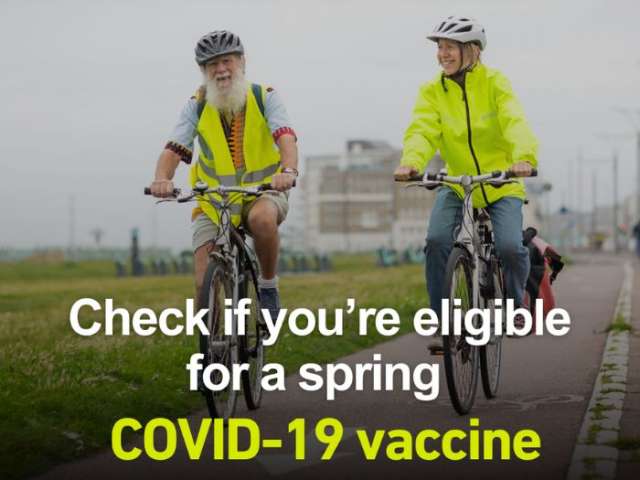
Adults aged 75 years and older, residents in care homes for older people and those aged 6 months and over with a weakened immune system are eligible for a free covid-19 spring booster until 17 June.