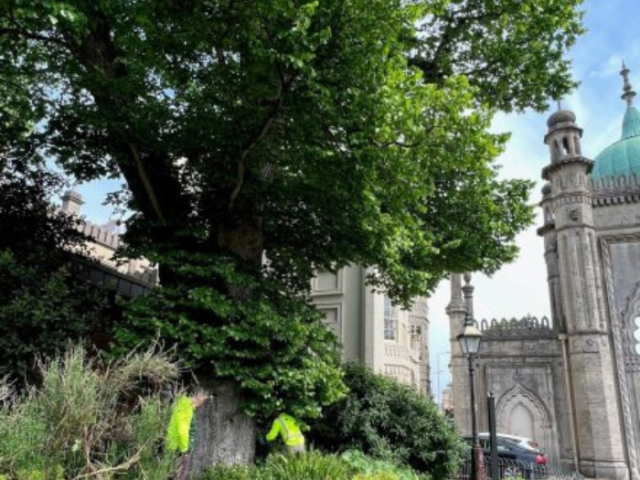
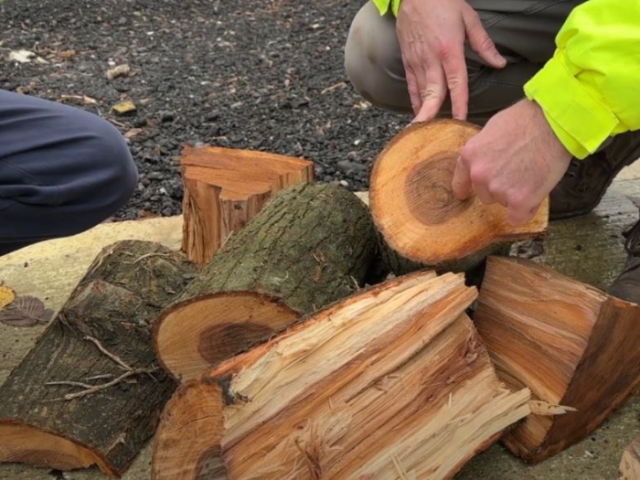
Annual inoculation of the city’s elm trees is due to start on 6 May for 2 weeks – part of the work to help protect our unique elm collection from disease and ensure the trees’ ongoing survival.
This will be the fourth year the council has vaccinated the city’s elms. The programme to inject around 1500 trees will take 2 weeks.
Inoculations work by injecting the tree with an organic, non-toxic control agent containing a type of fungus that induces a defensive response to elm disease, which is spread by the elm bark beetle.
Working together to protect elms and restore biodiversity
Councillor Alan Robins, Cabinet member for sport, recreation and libraries, said: “We have some of the rarest elm trees in the world here in Brighton & Hove, thanks to the success of our ongoing programme of elm tree monitoring, management of infected trees and the inoculation programme.
“The survival of the city’s elm collection is a result of many years’ collaboration between the council, local and national specialists, colleges and universities, and resident volunteers.
“We are lucky to have access to wonderful trees in our streets and parks, and some very rare elms. We also have an active tree-planting scheme, which means the health and wellbeing benefits of being close to trees, wherever you live in the city, can continue for the next generation.”
The city’s elms support nature recovery and biodiversity, providing habitat for the White-letter Hairstreak butterfly, in decline by 80% since 1976.*
Elm inoculation programme
This year’s programme covers:
| Aldrington Recreation Ground |
Hove Rec |
St Ann’s Well Gardens |
| Blakers Park |
Old Steine |
St Nicholas Rest Garden and Churchyard |
| Buckingham Road |
Pavilion Gardens |
Stoneham Park |
| Carden Hill |
Pembroke Avenue |
Swanborough Drive |
| Chanctonbury Road |
Pembroke Crescent |
The Level |
| Ditchling Road |
Portslade Cemetery |
The Upper Drive |
| Dyke Road |
Preston Park (including the Preston Twin) |
Ticehurst Road |
| Dyke Road Park |
Queen’s Park |
Valley Gardens |
| Elm Grove |
Preston Rock Gardens |
Victoria Gardens |
| Faygate |
Saltdean Vale |
Whitehawk Road |
| Highdown Road |
Saunders Park |
Whitehawk Way |
| Hove Park |
Shirley Drive |
26 rare elms distributed across the city (plus other elms in close proximity) |
Ensuring the survival of the city's elms
Our inoculation programme is just one aspect of the work we do to protect the city’s historic elm collection.
The arboriculture team carries out regular inspections, sometimes using drones, to look for signs of elm disease around the city.
We are taking samples from 26 trees to map the genome of elms to determine parentage and potential resistance to elm disease. This is part of a research group working out of Kew Gardens looking at survivor elms in the UK.
Brighton & Hove has the National Collection of Elms and, thanks to a fantastic bursary from Plant Heritage, we’ve been able to work in partnership with Plumpton College experts and students to propagate some of the most endangered trees.
Residents also play a crucial role in helping to protect the elms in their area, reporting signs of disease and helping with conservation work.
More information
Find out more about elm disease in Brighton & Hove and how you could help.
Find out more about the elm conservation project with Plumpton College on The Living Coast website.
*Fifty years of data reveal specialist butterflies disappearing across UK | UK Centre for Ecology & Hydrology