Asset type
Historic building - Hospital
Local Listing Reference
LLHA0051
Conservation Area (CA)
Montpelier and Clifton Hill CA
Description
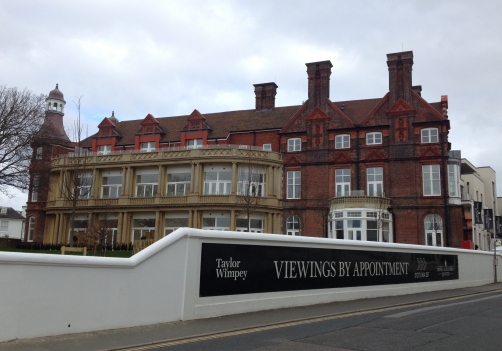
The Royal Alexandra Children’s Hospital was built on the current site in 1881. This followed the foundation of The Brighton Hospital for Sick Children at 178 Western Road in 1868, and the foundation of the first purpose-built Children’s Hospital in Liverpool in 1851.
Designed by Thomas Lainson in a Queen Anne style, it is a three storey red-brick building with terracotta mouldings. Later additions to the rear have largely been demolished through recent conversion to residential use. The building is set on a corner plot, within its own grounds. The grounds (and surrounding walls) form an important part of its setting.
Source: Antram & Morrice 2008, Royal Alexandra Children’s Hospital Planning Brief
A. Architectural, design and artistic interest
i. A good regional example of design, decoration and craftsmanship due to its massing, detailing and quality of execution.
iii. The building’s design philosophy and style deliberately contrasts with the prevailing Italianate architecture
iv. Thomas Lainson was a well-known Brighton-based architect whose work also includes the grade II* Middle Street synagogue.
B. Historic and evidential interest
ii The building is innovative as one of few purpose-built children’s hospitals of the time.
C. Townscape interest
i. The building contributes to the Montpelier and Clifton Hill Conservation Area, but contrasts with the surrounding buildings and urban form. The green space to the front of the building provides an important part of its setting and provides relief to the surrounding tight-knit form.
iii. The building forms a local landmark in the area and along Dyke Road.
D. Communal Value (non-compulsory)
ii. Symbolic value in representing the collective memory of the local community.
E. Rarity and representativeness
i. A good example of a purpose-built children’s hospital.
Date of inclusion
2015