Due to the hot weather, some council services may need to change, but the majority of our services are operating as normal. Read our news story for more information.
On 20 December 2024, the Government announced the 2025 to 2026 highway maintenance funding allocations for all eligible highway authorities and mayoral combined authorities. This included additional funding announced by the Chancellor as part of the 2024 Budget.
The Government has said that 25% of the £500 million additional funding for 2025 to 2026 would be contingent on local highway authorities demonstrating to Government that they are complying with certain criteria aimed at driving best practice and continual improvement in highways maintenance practice.
The rationale behind these requirements stems from the recent National Audit Office report and subsequent Public Accounts Committee hearing on the Condition and Maintenance of Local Roads in England. Both have recommended that the Department seek to improve its understanding of the condition of our country’s roads. By sharing this information, our authority can help secure much-needed funding for our highway networks as well as better inform local people of the steps we are taking to improve them.
This report provides a summary of the Highway Maintenance funding received by Brighton & Hove City Council from the Department for Transport (DfT) over the last 5 years and how this funding has been spent.
It provides a summary of the risk-based asset management approach that Brighton & Hove City Council has adopted to ensure it is aligned with the ‘Well-managed Highway Infrastructure – A Code for Practice’ and the Department's principle that prevention is better than cure.
It also ensures transparency with the public on how public funding has been allocated and used to maintain the roads in the local area to ensure safety whilst providing value for money with the limited funds available.
2. Our Highway Network
Table 1 - BHCC Highway Network
Table 1 sets out the length of road network that we are responsible for and how this is split by road type and usage.
Road type
A Road
B and C roads
U roads
Total Roads
Footways
Other Public rights of way
Cycleways
Length of highway, footways and cycleways in km
62km
67km
480km
609km
976km
159km
49km
Table 2 - Highway Assets
Table 2 summarises all the Highway assets which sit within the Highway Network that are managed by Brighton & Hove Highway Authority.
Table 3 details the level of funding received each year from the Department for Transport to maintain our Highway assets. It also details the revenue contribution made by the Council to fund reactive safety maintenance repairs across the City.
Year
Capital allocated by DfT (£,000s) *
Capital spend (£,000s)**
Revenue spend (£,000s) ***
Estimate of % spent on preventative maintenance +
Estimate of % spent on reactive maintenance
2025 to 2026 - projected
£ 5,283
£ 5,283
£ 2,210
71%
29%
2024 to 2025
£ 3,687
£ 3,738
£ 1,992
65%
35%
2023 to 2024
£ 4,269
£ 4,463
£ 1,900
70%
30%
2022 to 2023
£ 3,274
£ 3,936
£ 1,647
70%
30%
2021 to 2022
£ 3,274
£ 4,615
£ 1,398
77%
23%
2020 to 2021
£ 2,699
£ 4,425
£ 1,612
73%
27%
Notes
* total capital funding allocated by DfT per year for Highway Maintenance as part of the Highway Maintenance Block and the associated historic funding streams e.g. Network North, Pothole Fund, Additional Pothole fund, Incentive Fund etc. It does not include any additional funding from other departments for maintenance that has been bid for via a separate process e.g. National Highway Diversion Route Funding which is project/location specific. It also does not include the DfT Integrated Transport Block Fund which is primarily used to deliver new schemes.
** the actual spend of capital DfT Grant funding on maintenance across all Highway Assets. In some cases the spend exceeds the budget but in these years, DfT Integrated Transport Block grant funding was used to subsidise the maintenance needs within that year.
*** the total BHCC funded revenue spend on reactive safety maintenance on the Highway network to ensure safety across all asset groups.
+ It has been assumed that preventative maintenance includes resurfacing, surface extension treatments, large-scale patching to extend asset life, painting of cast iron assets, upgrade of signals and LED replacement programmes.
Additional information on spending
Capital Highway Maintenance
All capital funding provided by DfT as part of the Maintenance Block Fund and associated funding streams is spent on structural and preventative maintenance.
This includes the following work programmes:
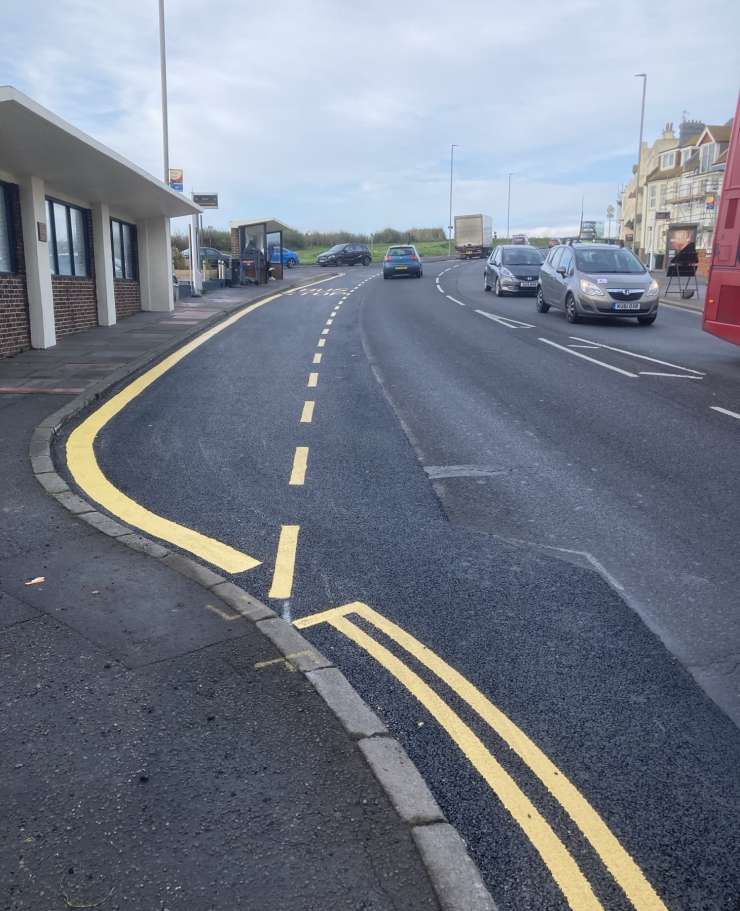
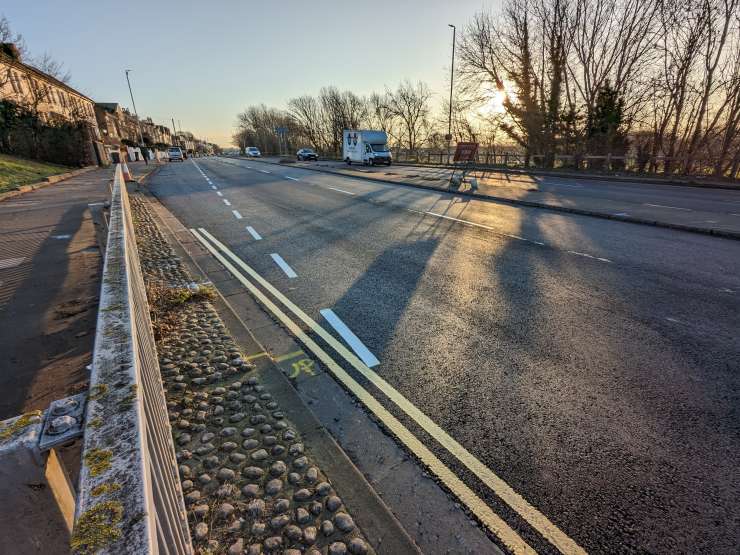
road and footway resurfacing
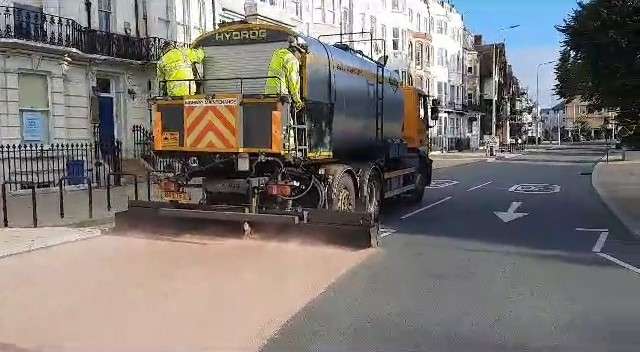
road surface extension treatments including rejuvenation and preservation treatments e.g. Reclamite and Micro-asphalt
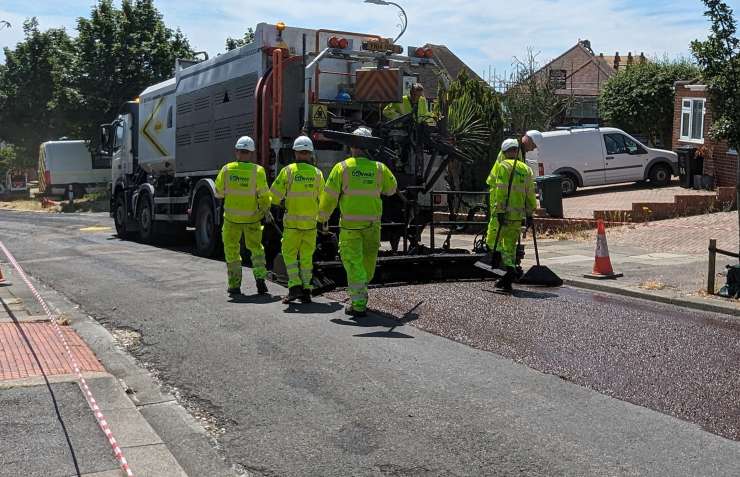
large-scale machine patching of roads and footways to extend asset life
replacing and upgrading traffic signals
painting cast iron lamp columns to extend asset life
spend to save projects to upgrade lighting and signals with LEDs
repairing highway structures
The information below shows the 4 types of planned road maintenance that will be carried out on our carriageways in 2025 to 2026.
Surface extension
Rejuvenation - Reclamite
restores the surface
prevents cracks
seals the surface
applied to new surfaces every 3 years
Preservation - Mircro-asphalt
restores skid resistance
seals the surface
extends life by 10 to 15 years
Machine patching
repair of larger sections of failing roads to extend asset life
also used for pre-patching before surface extension treatments if needed for example the A259
Resurfacing
resurface of failed roads
includes the use of specialist products, for example SureLayer and SureLane
The split of the capital budget between preventative and structural maintenance for roads is determined by condition projection modelling. Since 2024 to 2025, 53% of the available capital budget has been allocated to preventative maintenance and 47% has been allocated to structural maintenance.
Reactive safety maintenance
This includes the repair and making safe of all asset types on the highway in line with the BHCC Highways Reactive Safety Maintenance and Inspection Policy 2025.
The approach taken specifically for roads and footways is to carry out permanent repairs whenever possible. This includes removing material back to solid ground and patching the surface using a warm-mix material. Temporary repairs are only carried out when there is an immediate risk of harm and/or access is difficult for example at a busy junction that requires more planning to gain access. In these cases, a temporary repair is carried out using a cold mix material however a follow-up ticket for a permanent repair is raised whenever feasible at the same time.
Table 4 – Estimated number of carriageway pothole repairs
Date
2020 to 2021
2021 to 2022
2022 to 2023
2023 to 2024
2024 to 2025
Estimate of the number of potholes filled
8353
3577
3163
4805
6027
Notes
Repairs are recorded in m2 rather than the number of potholes. It has therefore been assumed that 1m2 of surface repair is the equivalent of one pothole.
4. Condition of local roads
All Councils are required to submit road condition data to the Department for Transport annually. The method for collection and minimum frequency is set out by the government and this data is represented in tables 5 to 7 below.
All A, B & C roads are required to be surveyed at least once every 2 years and unclassified roads are to be surveyed every 4 years.
In Brighton & Hove, we have traditionally collected data more frequently than is required, however in 2023 to 2024, we carried out a full network condition survey of our roads using a new collection method. This was to improve the quality of our condition data and to create a new baseline. From 2025 to 26 onwards, we will continue to take a full network approach as this ensures that we can make informed decisions about all roads within our network each year.
Table 5 – A Roads, Road Condition
Financial year ending
Percentage of A roads in each condition category
Red
Amber
Green
2020
8%
39%
53%
2021
6%
34%
60%
2022
6%
32%
62%
2023
6%
38%
56%
2024 *
18%
26%
56%
Table 6 – B & C Roads. Road Condition
Financial year ending
Percentage of B and C roads in each condition category
* Historically, road condition data has been collected using a method known as SCANNER. In the financial year ending in 2024, the Council moved to a new method of road condition collection to improve accuracy. The increase in the percentage of red roads in this year is therefore due to the change in collection method rather than a significant change in the condition of the network.
Changes in road condition data collection
Road condition assessments on the local classified road network in England have traditionally been collected using Surface Condition Assessment for the National Network of Roads (SCANNER) laser-based technology.
A number of parameters measured in these surveys are used to produce a road condition indicator which is categorised into three condition categories:
Green - no further investigation or treatment required
Amber - maintenance may be required soon
Red - should be considered for maintenance
In 2023 to 2024, the Council moved away from this approach as the accuracy of SCANNER in an urban environment is not as good as in rural settings. This means that the data has remained relatively consistent between 2020 to 2023 despite there being a noticeable decline in the condition of the network.
We now carry out an Annual Engineers Inspection (AEI), which is carried out by professional engineers who record an effective treatment for a realistic treatment length i.e. junction to junction. This provides a more realistic representation of what work is needed on the network and how much it will cost to deliver. The condition indicators with an AEI survey are as follows:
Green – as new or up to standard
Amber - requires preventative maintenance
Red - requires structural maintenance
From 2026 to 2027, the Department for Transport will be introducing a new data collection standard (BSI PAS2161). The new standard will categorise roads into five categories instead of three to help the government gain a more detailed understanding of road conditions in England. This may mean that there is a further shift in the data before we can establish a baseline to compare year-on-year progress.
Once defects begin to appear regularly on a road, the road has structurally failed and needs to be resurfaced. There is not enough funding to resurface all the roads that have failed and therefore prioritising the repair of investigation-level defects keeps the road safe until a structural resurface can be funded.
There is currently a £57m maintenance backlog on carriageways and £39m on footways.
To improve the condition of our roads we need long-term investment in our capital-planned maintenance programmes. This includes surface extension treatments that rejuvenate and preserve the condition of good roads to prevent them from failing in the first place.
We follow a data-led lifecycle asset management approach to develop a prioritised programme of planned maintenance.
The lifecycle approach
A lifecycle approach is a data-led technique used by most local authorities to monitor and predict the future condition of their highways assets so that they know which roads to treat, how to treat them and when to treat them to maximise the lifespan of each asset. This reduces the whole life cost and reduces carbon over time. The condition data collected as part of this process is also used to carry out condition projection modelling, which predicts the future budget requirements to maintain a ‘steady state’.
By following a lifecycle approach, we treat roads at each stage of their lifecycle so that the overall life of the asset can be extended. This delays the need for costly resurfacing and reduces the whole life cost of the asset. A lifecycle plan includes cost-effective preventative maintenance such as rejuvenation and preservation treatments that are applied to surfaces whilst they are still in good condition. This way we keep our good roads good for longer.
How we prioritise the programme
Annual condition survey data is used to identify what treatments are needed on each road. We then apply value management to prioritise the required works. This is completed in two stages as set out below.
Stage 1 – An automated process which prioritises annual condition survey data based on several factors including:
road condition
predicted deterioration rates
highway inspection condition reporting
road maintenance hierarchy and strategic significance including walking and cycling networks
historic reactive maintenance costs
proximity to key services
ride quality
Stage 2 – A manual process to filter schemes based on:
an engineering site assessment
proximity to live or upcoming development sites
proximity to live or upcoming Capital Projects
road space availability i.e. planned utility works
applying lifecycle planning budget allocations across treatment types
Review of scheme-level cost and affordability
For further details of our approach across all our highway asset groups, please refer to the Highways Asset Management Policy and Strategy 2023 to 2025. This document is currently being reviewed and an update will be published later in 2025.
How we follow best practice, deliver innovation and drive efficiency
Brighton & Hove City Council’s Highway Asset Management approach aligns with the Well-Managed Highway Infrastructure Code of Practice. We are active members within local and regional groups, such as the Local Council Road and Innovation Group (LCRIG) and Local Government Technical Advisers Group (LGTAG). These groups meet regularly to share best practice and to discuss the latest innovations within the industry.
Specific plans for 2025 to 2026
Full details of how the Highways Maintenance grant funding will be spent in 2025 to 2026 were agreed by members at Full Cabinet on 24 April 2025.
Table 8 – Highway Maintenance Programme Summary 2025 to 2026
Table 8 summarises the key anticipated deliverables for 2025 to 2026.
Asset Group
DfT Grant Funding Allocation (£000)
Outputs
Roads
£3,950
131,327m2 of preventative maintenance including both rejuvenation and preservation surface treatments
35,894m2 of road resurfacing
45,104m2 of large-scale patching to extend asset life
Footways
£628
10,000m2 of preventative maintenance including slurry seal to extend asset life
Up to 35 footways will receive large-scale patching to extend asset life
Highway Structures
£300
Project contributions to strengthen East Cliff wall to support Madeira Terrace and Duke’s Mound retaining wall
Drainage
£100
Repair of highway drainage infrastructure at key flooding sites around the City, including replacement of broken gullies and pipes as needed to reduce surface water. Expected to bring improvement to 10-15 sites.
Street Lights
£100
Preventative painting of up to 360 cast iron lamp columns and 360 swan neck brackets
Traffic Signals
£150
Upgrade of up to 2 existing traffic signal junctions/crossings
Asset Management Framework
£55
Contribution towards condition and risk surveys and condition projection modelling for two further asset groups.
Streetworks
Managing streetworks on the road network
The content below explains the steps the Council are taking to minimise disruption caused by street works across the City and to ensure that they are planned and coordinated effectively. Streetworks include all works carried out on the public highway, whether it is works carried out on behalf of the Council or by third parties such as utility companies, developers or local residents and businesses.
Permit scheme
BHCC has had a road permit scheme in place since 2015, which manages works on the network to improve the strategic and operational management of the road network through better planning, scheduling and management of activities to minimise disruption to any people using the road or pavement.
Regular liaison with utilities
The Permit Team meets with utility companies and contractors every month to improve coordination and compliance with the relevant regulations.
Section 58
A Section 58 notice is raised ahead of any planned carriageway or footway resurfacing works. This protects our newly laid roads and footways, and prevents utilities from digging them up for 3 to 5 years after they've been reconstructed or resurfaced, unless there is an emergency.
Internal monthly coordination meetings
Regular internal meetings are held to improve works coordination across service areas and project boards are set up to manage larger projects or programmes.
Restrictive hours
Hours of working are restricted on the strategic network to minimise disruption. E.g. works in the vicinity of schools are often restricted to school holidays when feasible or carried out within restricted hours to minimise disruption.
Established wide load routes
Specific routes for wide loads are designated and street furniture within these routes is removable where possible to aid the movement of wide loads when needed.
Special events
The Council works closely with event organisers to ensure that events are managed safely and to minimise disruption to other road users. Large events are coordinated from the Traffic Control Centre which operates 24/7.
Transparency of active works – One Network
All permitted works are visible on www.one.network/uk which can be accessed by everyone.
Permit Inspectors
Permit Inspectors monitor works carried out on the network to ensure that they are carried out safely and to the required standards. Action is taken against organisations that do not comply with the conditions of their permits or where standards are not met.
Local Street Gazetteer and National Street Gazetteer
Maintaining the Local Street Gazetteer and providing monthly updates to the National Street Gazetteer
National Underground Asset Register (NUAR)
Providing asset data on an annual basis to the National Underground Asset Register (NUAR) to improve safety for road operatives and to improve transparency
Licensing for skips, scaffolding, table and chairs and hoarding
The Council has a duty to protect the Highway and keep it safe for all road users. This includes managing the use of skips, scaffolding, table and chairs and hoarding via a licensing scheme. Action is taken against those who do not comply with the conditions of their licence or where standards are not met.
Lane Rental Scheme
Future consideration is being given to the introduction of a Lane Rental Scheme which will apply charges to external organisations for the time spent on the Highway. This aims to reduce traffic congestion and disruption caused by street works. The charges are focused on the busiest streets and times.
Climate change, resilience and adaptation
In December 2018, Brighton & Hove City Council declared a climate and biodiversity emergency in a cross-party commitment. The council held a Climate Assembly and Youth Assembly on the topic of travel and transport in autumn 2020.
Ongoing development of climate action work was published in the 2030 Carbon Neutral Programme and approved by the Policy and Resources Committee in March 2021.
Key initiatives in the last three years to decarbonise our maintenance operations have included:
adopting a data-led whole lifecycle approach to managing our key Highway assets, such as roads and footways, this is intended to maximise asset life, reduce costs and reduce the carbon impact of maintaining our roads in the long-term
using preventative maintenance treatments and processes as recommended by the Road Surface Treatment Association to extend the life of assets and reduce the whole life carbon cost
use of the latest products within the industry to reduce the volume of new material needed to maintain the network e.g. use of poly-modified binders to add strength to the roads and therefore reducing construction depths
trialling of innovative surface extension treatments on our ageing 150km concrete road network
retrofitting LED lights into all street lights and traffic signals by 2030
working towards 100% of all Council vehicles being electric by 2030
Alignment with the Orbis Environmentally Sustainable Procurement Policy which ensures that carbon reduction and accountability are built into our NEC Highways Construction Framework Contract and all future Highway contracts
Implementing a new Highway Asset Management System to improve efficiencies in the operations, as well as to improve data and reporting and therefore improve decision making and quality control
Additional information on plans
The Highways Asset Management Policy and Strategy 2023 to 25 is available to view online and provides further information on the Council’s approach to Highway asset management. This document is currently being updated and an update will be published later in 2025.
The Local Transport Plan sets out the Council’s outcomes and priorities for Transport and Travel. Details of past and future Local Transport Plans can be viewed on our website.
The Bus Service Improvement Plan is a strategic document that sets out how the bus services in the city could be improved. Specifically, this includes how the council and operators will respond to the aspirations of the National Bus Strategy and grow bus use.